
Getting Repair Quotes: How to Scope a Job, Compare Prices and Pay Safely
Two tradespeople can price the same leak very differently, and the cheapest figure often leaves out work you pay for later. Here is how to describe a repair, collect written quotes, compare them fairly and pay safely.
Before anyone prices a repair, write down what is wrong, where, what you want done and what must be put back afterwards. Give the same job sheet to every contractor so that their prices can be compared.
For anything beyond a small job, get written quotes from about three contractors rather than spoken estimates. A quote is a fixed price for agreed work; an estimate is a best guess that can change.[1][2]
Compare what each quote includes, not just the total: materials, making good, call-out fees, warranty, timeline and payment terms. Keep any deposit small, pay in stages, avoid cash, and keep every paper.[2][5]
Most of this can be done yourself with ordinary tools.
Most arguments about repairs start before the work does: a price given on the phone, no agreed scope, and cash handed over. Other guides explain how to find a fault, such as bathroom water leaks or whether to repair or replace a damaged water pipe; come here when you are ready to have the work priced. We found no reliable, dated, published price list for household repairs in Bangladesh, so this guide gives no figures. It explains how a price is built, so you can judge the ones you are given.
Why prices for the same repair differ: the usual causes
When quotes for one job are far apart, the contractors are usually pricing different jobs. The common reasons:
- The job was described differently to each contractor, so each guessed.
- One price includes breaking tiles or plaster and making good (putting the surface back as it was); another stops at the repair.
- Materials differ in brand and grade, or the owner is expected to supply them.
- One contractor has found the cause; another is pricing a guess and will charge again if it was wrong.
- Some prices are fixed quotes; others are estimates or day rates that grow with time on site.
- Extras such as a call-out fee, debris removal or scaffolding (a temporary frame for working at height) appear in some prices only.
Citizens Advice Scotland warns that a quote far below the others may point to inexperience, dishonesty or a different scope of work.[2] The Federation of Master Builders (FMB), a UK builders' trade association, says simply: beware suspiciously low quotes.[3]
Estimate or quote: know which one you are holding
New Zealand's government consumer protection service describes an estimate as the provider's best guess at the cost, spoken or written, and not a fixed price. A quote is an offer to do the job for a set price; once accepted, the provider generally cannot charge more unless you agree to extra work or the scope changes.[1] It adds that a final bill should generally come within 10 to 15 percent of an estimate.[1] That is New Zealand guidance, not a Bangladeshi rule, but it is a fair test of an honest estimate.
Citizens Advice Scotland says a fixed quote should change only for extra work you ask for or agree to, or a genuine calculation error.[2] Which?, the UK consumer organisation, notes that even a quote can rise if the specification changes or an unexpected problem turns up, so ask what could push an estimate up and by how much.[4]
Step by step: scope the job before anyone prices it
Scoping means writing the job down clearly enough that two strangers would price the same work. FMB advises giving every builder the same information so quotes can be compared fairly.[3] A one-page job sheet is usually enough.

- Where the problem is: room, flat, shaft, roof or outside wall
- Dated photos and video, with something for scale
- Measurements of the damaged area
- Access: floor, lift, ladders, a neighbour's flat
- What must be put back: tiles, plaster, paint
- Time limits: working hours, shut-offs, finish date
- The same sheet goes, unchanged, to every contractor
- Describe the symptom: what you see, where, since when, and whether it is getting worse; for example, ‘damp patch on the bedroom ceiling below the bathroom since July, larger after showers’.
- Take dated photos and a short video, close up and from across the room.
- Measure what you can safely reach: the stain or crack, the tiled area, any exposed pipe.
- Note access: the floor, whether the lift works, and whether the work is in your flat, a shared shaft, the roof, an outside wall or a neighbour's flat.
- State the result you want, such as ‘find and fix the cause of the leak’, not your guess at the cure.
- List what must be put back: tiles (and whether you have spares), plaster, paint, false ceiling, fittings.
- State material preferences, or ask each contractor to name the brand, grade and size proposed.
- Add limits: the building's working hours, when water or power can be off, and your finish date.
If you do not know the cause, say so. It is often worth paying for a diagnosis visit first, because a price for ‘fix the leak’ is only as good as the guess behind it. Guides such as damp walls and seepage help you describe the symptom.
What you need before calling contractors
- The job sheet, photos and video, ready to send unchanged to each contractor, plus any earlier invoices for the same problem.
- Photos or drawings of concealed pipes and cables, if you have them; inspecting plumbing after a renovation explains why they matter.
- The building's rules on working hours and debris, and the committee's contact if shared parts are involved.
FMB notes that detailed quotes take time and some builders charge for them;[3] New Zealand's consumer service says a business must tell you beforehand if it charges for a quote.[1] Ask before the visit.
Getting three written quotes
Citizens Advice Scotland and New Zealand's consumer service both suggest written quotes from at least three businesses where you can,[1][2] and FMB recommends three, warning that many more wastes everyone's time.[3] For a small, simple job, one written price from someone with a good record may do.
- Shortlist people with a track record: ask for two or three recent similar jobs and call those customers.[2]
- Ask each to visit. A price given over the phone is an estimate at best.
- Give each the same job sheet, and share any useful answer with all of them.
- Tell them you are collecting other quotes; New Zealand's consumer service notes this may make prices more competitive.[1]
- Ask for a dated written quote with the contractor's full name, business address and phone number, and how long the price is valid.[2]
- Do not let anyone start work during the quoting visit.
For electrical work, also check the licence as explained in when to call a qualified electrician.
Comparing quotes like with like
Lay the quotes side by side. Citizens Advice Scotland says a written quote should give a total price rather than a day rate, break down work and materials, and say when the price could increase;[2] New Zealand's consumer service adds hourly rates and the timeframe.[1] FMB advises checking what each quote includes and excludes.[3]
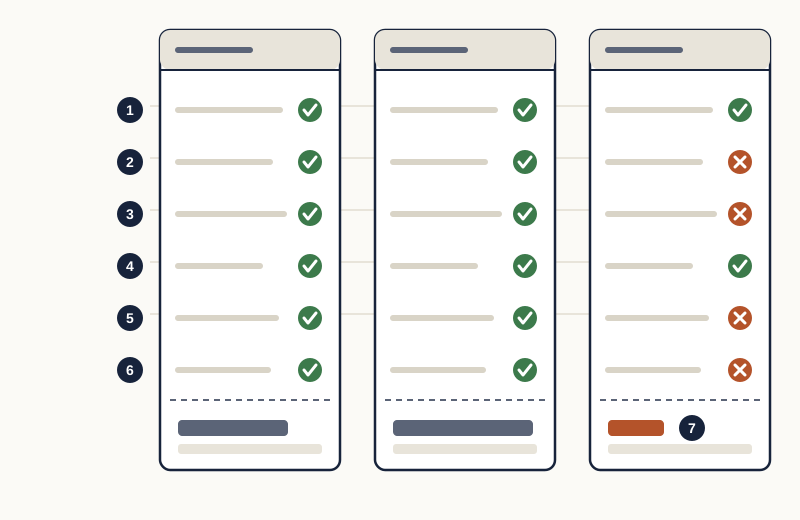
- Scope matches your job sheet, including finding the cause
- Materials named by brand, grade and size
- Breaking, making good and cleaning up included
- Call-out or inspection fee stated
- Timeline: start date and working days
- Warranty on materials and workmanship
- The lowest total, which leaves items out
| Item | What to look for | Why it matters |
|---|---|---|
| Scope | The same job as your sheet, including finding the cause | A lower price for a smaller job is not a saving |
| Materials | Brand, grade, size, quantity, and who supplies them | Unnamed materials can be swapped for cheaper ones |
| Access and making good | Breaking, re-tiling, plastering, painting, cleaning, debris removal | Often the largest hidden cost |
| Call-out and visits | Any fee, and whether it is deducted if you go ahead | Changes the real total of a small job |
| Price type and timeline | Fixed or estimate; start date, working days, shut-offs | Estimates grow; delays cost disruption |
| Warranty | Length, and whether it covers materials as well as workmanship | Without one, a failed repair is hard to send back |
| Payment terms | Deposit, stages, final payment, method | Large payments up front carry risk |
Citizens Advice Scotland advises checking whether a guarantee covers materials as well as workmanship, and keeping a written copy.[2] Where pipe choice is the main difference, see choosing suitable pipe materials. If one quote is much higher, ask why; it may include making good the others left out. If one is much lower, ask what it leaves out, then have the others price the same thing.
What drives the cost of a repair
Without reliable published prices, it helps to know what a fair price is made of. The balance between these items explains most differences between quotes.
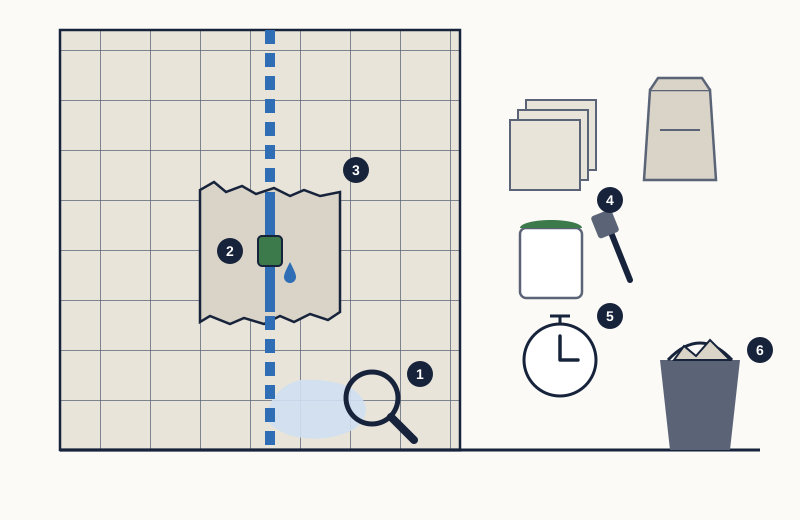
- Finding the cause: tracing the damp back to the leak
- The repair itself: new pipe section or fitting
- Access: tiles and plaster broken to reach the pipe
- Making good: new tiles, adhesive, grout and paint
- Labour time on site
- Debris removal and cleaning up
- Finding the cause: tracing a hidden leak can take longer than fixing it.
- Materials: quantity, brand and grade; parts or tiles that must match old ones can cost more.
- Skill: a licensed electrician or waterproofing specialist costs more than general labour, and is sometimes the only safe choice.
- Access: concealed pipes mean breaking tiles; outside walls and roofs may need scaffolding; no lift means carrying time.
- Making good: re-tiling, plastering and repainting can cost more than the repair itself.
- Call-out, travel, minimum charges, debris removal and cleaning.
- Testing and warranty, and timing: urgent work and monsoon roof work can affect price and availability.
Relative comparisons hold even without figures. Replacing a tap cartridge costs far less than replacing the mixer; a pipe on the wall surface costs less to replace than one behind tiles; fixing the cause of damp once costs less than repainting the stain every year.
Deposits and payment stages
The safest pattern is a small deposit, if any, then payments tied to finished stages, and the final payment after the work is checked. Advice on deposit size differs, so treat these as guidelines, not Bangladeshi rules: New Zealand's consumer service says no deposit is legally required there and suggests no more than 10 percent;[1] Citizens Advice Scotland says no more than 25 percent;[2] and Connecticut's consumer protection department in the US says an up-front payment should generally not exceed one third, with a three- or four-part schedule tied to progress.[5]
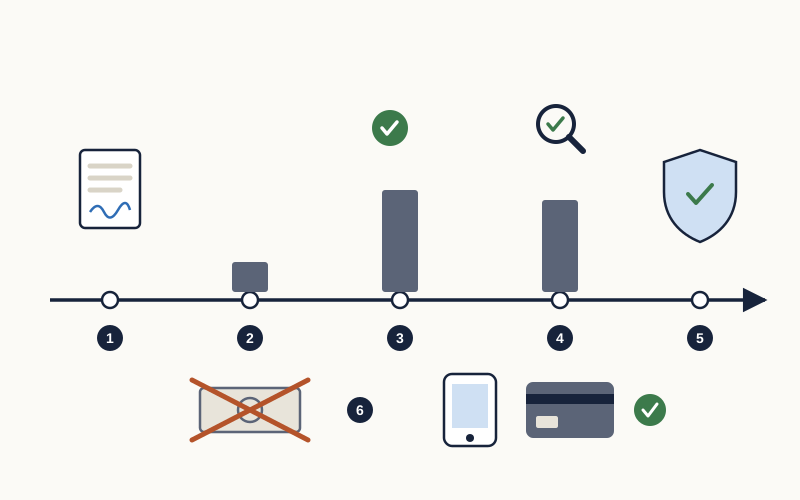
- Written agreement before any money changes hands
- A small deposit, or materials bought directly
- Stage payment after a milestone you have checked
- Final payment after testing and inspection
- Warranty period: keep the invoice and guarantee
- Pay by a traceable method, not cash
- Agree scope, price, timeline, warranty and payment schedule in writing before paying anything.
- If materials are needed first, buy them yourself against the agreed list or pay the supplier directly, as Citizens Advice Scotland suggests.[2]
- Link each later payment to a visible milestone, such as ‘pipe replaced and pressure-tested, before tiling’.
- Pay by bank transfer, cheque or mobile financial service; Connecticut's guidance says never pay in cash and get a receipt for every payment.[5]
- Make the final payment only when the work is finished to your satisfaction[5] and you hold the invoice and warranty in writing.
Connecticut also requires changes to a home improvement contract to be written and specific, with a copy for the customer.[5] For a flat repair, a signed note or message confirming extra work and its price does the same job.
Red flags and common mistakes to avoid
- Comparing totals without comparing what each quote includes.
- Agreeing extra work on site without a written price.
- Paying in full before checking: running the water, looking for damp again after a few days, or seeing the circuit working.
- Tiling or plastering over concealed work before photographing it.
- Hiring someone who turned up unannounced; Which? advises never to sign or pay on the spot.[4]
When you need a qualified professional, not just a lower price
Citizens Advice Scotland advises a registered gas engineer or electrician for gas and electrical work.[2] Compare quotes among qualified people, not between qualified and unqualified ones.
Repair or replace? When a part has failed more than once, ask for both options priced, with the expected life and warranty of each, and compare the cost per year of service, not just today's bill.
Keep records, and what to do if a job goes wrong
Citizens Advice Scotland advises keeping the quote, the contract, notes of meetings, deposit receipts and a written copy of any guarantee;[2] New Zealand's consumer service explains that a detailed written quote is your evidence if something goes wrong.[1]
- The job sheet and photos from before the work.
- Every written quote, including those you did not accept.
- The accepted quote, signed or confirmed by message, and any written changes.
- A receipt for every payment, with date and method.
- Photos of concealed work before it was covered.
- The final invoice, naming the work, materials and warranty, and any test results.
If a contractor does not deliver what was agreed, raise it with them first, in writing, with the original quote. In Bangladesh, the Consumer Rights Protection Act 2009 treats failing to properly deliver a promised product or service in exchange for the price paid as an anti-consumer-rights practice, and its definition of service includes construction, water supply, sewerage, electricity and gas.[6] A complaint must be made within 30 days of the cause arising.[6] Whether a particular private repair is covered is for the authorities to decide, one more reason to keep a written quote and receipt.
Complaints go in writing to the National Consumer Rights Protection Directorate with the receipt attached, or online through its complaint system at dncrp.com.[7] Its contact page gives the hotline 16121.[8]
Shared repairs and planned maintenance in a building
For the roof, pumps, risers and tanks, the committee commissions the work and residents pay through the service charge, so the paper trail matters even more. Running a building committee covers the committee's rules for contracts; the job sheet, comparison table and staged payments here work the same way. Planned work is easier to price well than emergencies, and planning a preventive maintenance schedule covers budgeting and annual maintenance contracts.
Next steps
- Write a one-page job sheet with photos, measurements, access notes and what must be put back.
- Shortlist three contractors with checked references and, for electrical work, a licence you can verify.
- Ask each for a dated, itemised written quote, and whether it is fixed or an estimate.
- Compare them line by line with the table above, and ask about any large gap.
- Agree scope, warranty and staged payments in writing, pay traceably, and keep every paper in one file.
Common questions
- How many quotes should I get for a small repair?
- For a minor job such as a tap cartridge, one written price from a plumber with a good record may be enough. For concealed, electrical, structural or costly work, aim for three, as UK and New Zealand consumer advisers suggest.[1][2]
- Is it rude to ask for the price in writing?
- No. A professional expects it, and it protects both sides. Which? counts refusal to give a written quote as a red flag.[4] A message with the scope and price is better than nothing; a signed sheet is better still.
- Should I pay a deposit?
- Only if needed, and keep it small: New Zealand's consumer service suggests no more than 10 percent,[1] Citizens Advice Scotland no more than 25 percent.[2] Buying materials yourself avoids a materials deposit, but you then carry the risk if they are wrong.
- Why does a contractor charge just to come and look?
- Diagnosis and a detailed quote take time; FMB notes some builders charge for detailed quotes.[3] Ask about any fee before the visit, and whether it is deducted if you give them the job.
- What if the final bill is higher than the quote?
- Ask for the reason in writing. A fixed quote should rise only for extra work you agreed to or a change in scope.[1][2] If you cannot settle it, Bangladesh's consumer rights law allows a written complaint within 30 days of the cause arising,[6] filed with the National Consumer Rights Protection Directorate.[7]
Sources
The facts in this guide were checked against these sources.
- Quotes and estimates — Consumer Protection, Ministry of Business, Innovation and Employment (New Zealand Government). accessed 18 October 2026.
- Before you get work done on your home — Citizens Advice Scotland. accessed 18 October 2026.
- 5 things you need to know about getting a quote for building work — Federation of Master Builders (FMB) (published 1 August 2023). accessed 18 October 2026.
- Rogue traders – 5 red flags to look out for — Which? (published 16 February 2026). accessed 18 October 2026.
- Contracting and Working With a Home Improvement Contractor — Connecticut Department of Consumer Protection (US). accessed 18 October 2026.
- ভোক্তা অধিকার সংরক্ষণ আইন, ২০০৯ (Consumer Rights Protection Act, 2009) — Laws of Bangladesh, Legislative and Parliamentary Affairs Division, Ministry of Law, Justice and Parliamentary Affairs. accessed 18 October 2026.
- অভিযোগ দায়েরের পদ্ধতি (Procedure for filing a complaint) — National Consumer Rights Protection Directorate (জাতীয় ভোক্তা-অধিকার সংরক্ষণ অধিদপ্তর), Government of Bangladesh. accessed 18 October 2026.
- যোগাযোগ (Contact) — National Consumer Rights Protection Directorate (জাতীয় ভোক্তা-অধিকার সংরক্ষণ অধিদপ্তর), Government of Bangladesh. accessed 18 October 2026.
This guide is general information. Have gas, structural and live electrical work done by a qualified, licensed professional. Your building’s rules and committee decisions take precedence over anything written here.
Written from the cited sources by the RUAP.NET editorial team. It has not been reviewed by a licensed engineer, plumber or electrician; for work on gas, structure or live electrics, use a qualified professional.
Spotted a mistake? Tell us — we check it, correct the guide and record the date of the correction. Report an error →