
Doors, Windows and Their Fittings: A Practical Maintenance Guide for Flats
Doors that stick or will not latch, sliding windows that grind, and rain that creeps in round a frame every monsoon all get worse when left. This guide covers the hinges, locks, sliding windows, seals, grills and door closers in an apartment.
Most door and window faults come from dirt in tracks and drain holes, loose screws in hinges and fittings, and seals that have shrunk or worn. Cleaning, tightening and light lubrication once or twice a year prevent most of them.[1][3]
Keep the drain slots in window frames clear and never seal over them.[2][3] Use light machine oil on hinges, and graphite rather than oil in a key cylinder.[1][3]
Where children live, fit window stops or guards; make sure grills can be opened quickly from inside in a fire; and keep the fire doors in the common areas self-closing.[5][7][4]
Most of this can be done yourself with ordinary tools.
A typical flat has a heavy entrance door, timber internal doors, bathroom doors that live in humid air, and aluminium or uPVC sliding windows, often behind steel grills. A RUAP flat, with four bathrooms and four verandas, has many hinges, latches, tracks and seals.
Warning signs and what usually causes them
Match the symptom to the likely cause before you buy parts or call anyone:
| Symptom | Likely cause | What to try first |
|---|---|---|
| Door rubs at the top on the handle side, or will not latch | Loose hinge screws; the door has dropped[2] | Tighten or replace the screws |
| Door sticks all round, but only in the monsoon | Timber swelling with moisture, or thick paint[2] | Let it dry; plane only if needed |
| Key is stiff or the lock jams | Dirt in the lock, or the latch out of line with the strike plate[2] | Clean, add graphite, check alignment |
| Sliding sash grinds, jumps or feels heavy | Grit in the track, or worn rollers[1][2] | Vacuum the track, then check the rollers |
| Water in the track or on the sill after rain | Blocked drain holes in the frame[2][3] | Clear the drain holes |
| Draught, dust or noise round a closed window | Shrunken or worn seals, or a sash that does not close tightly[2][8] | Check and replace the seals |
| Mist between the panes of double glazing | The sealed glass unit has failed[2] | Replace the glass unit |
| Common-area door slams or will not shut | Closer badly adjusted, loose or leaking oil | Report it to the committee |
Damp patches beside or below a window that grow after rain usually mean water is coming in from outside, often round the frame;[9] see also damp walls and seepage.
Tools and materials you will need
- Screwdrivers, and a set of Allen (hex) keys for handles and roller adjusters.
- A vacuum cleaner with a narrow nozzle, a soft brush and a pipe cleaner for drain holes.
- Mild, pH-neutral detergent and soft cloths; no solvents, bleach or scouring pads.[1][3]
- Light machine oil for hinges, powdered graphite for locks, and a dry silicone spray for aluminium tracks if the window maker approves it.[1]
- Longer screws, wooden dowels and wood glue for stripped hinge holes.
- Seals, brush strip or rollers matched to your window system; take the old piece to the shop.
Hinged doors: sagging, sticking and squeaking
A door that drags on the frame or will not latch has usually dropped on its hinges. Consumer NZ, the New Zealand consumer organisation, notes that loose hinge screws can make a door stick on the handle side.[2] The top hinge carries the most load, so check it first.
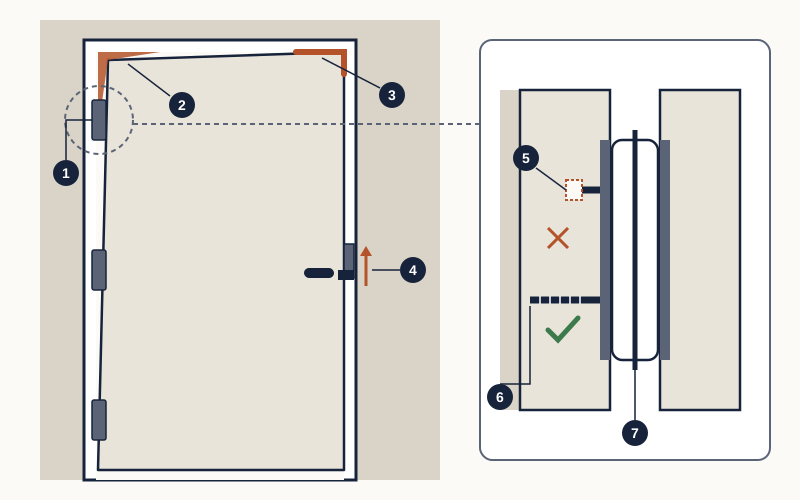
- Top hinge with loose or stripped screws
- Gap opening up at the top on the hinge side
- Door rubbing the frame at the top corner on the handle side
- Latch sitting below the strike plate, so the door will not catch
- Short screw turning in a worn hole: it no longer grips
- Longer screw (or a plugged and re-drilled hole) reaching solid timber
- Hinge pin: check for wear and lubricate lightly
- Open the door and gently lift it by the handle. Movement at the hinges means loose screws.
- Tighten every hinge screw, on the door and on the frame, without over-tightening into soft wood.
- If a screw just spins, fit a longer one that reaches solid timber, or glue a dowel into the hole and re-drill it once the glue has set.[2]
- Replace worn hinge pins and lubricate the hinge lightly; Stegbar, an aluminium window and door maker, recommends light machine oil for hinges.[1][2]
- If a timber door still sticks, it may simply be swollen. Let it dry out and plane it only if it still sticks,[2] then seal the bare edge with paint or varnish.
Locks, latches and handles
With locks, the wrong lubricant does more harm than none. Stegbar recommends puffing powdered graphite into the keyway,[1] and the care guide from the UK installer Clearview Home Improvements says not to oil cylinder locks or use solvent-based aerosol sprays.[3]
- For a stiff key, clean the key, puff a little graphite into the keyway and work the key in and out a few times.[1]
- If the latch misses the hole in the strike plate, the lock will jam; correct the door's alignment first.[2]
- Lightly oil the moving parts of multi-point locks on uPVC doors about once a year, and grease the hooks.[3]
- Tighten loose window catches, which otherwise stop the sash pulling tight against its seals.[2]
For choosing locks and changing them when you move in, see the flat and building security guide.
Sliding windows and doors: tracks, rollers and drain holes
Many Dhaka flats have aluminium sliding windows, and uPVC is becoming more common. Each sash (the moving glazed panel) runs on small rollers in a track at the bottom of the frame. Rain running down the glass collects in the outer channel and leaves through small drain slots, often called weep holes. When these block, water builds up in the track and can spill inside.[2][3]
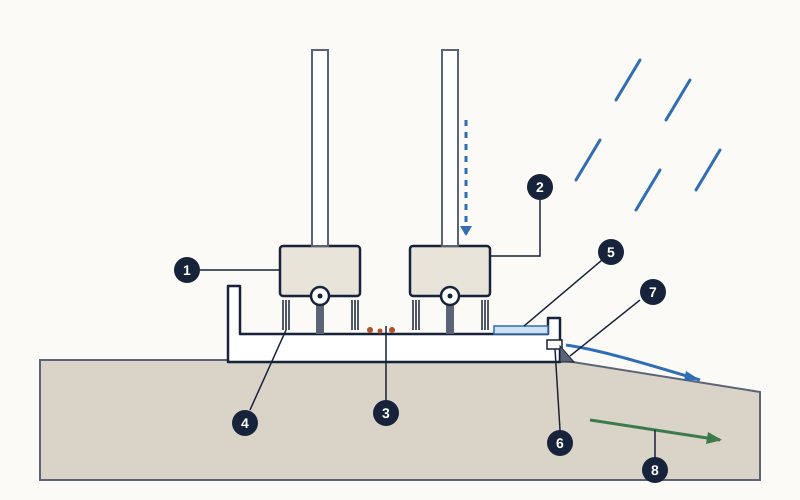
- Inner sliding sash running on its roller
- Outer sliding sash running on its roller
- Track rails: grit here makes the sash stiff and wears the rollers
- Brush or pile weatherstrip along the bottom of the sash
- Outer channel where rain running down the glass collects
- Drain slot (weep hole) that lets the water out: keep it clear, never seal or paint over it
- Sealant joint between the frame and the wall on the outside
- Sill sloping down and away from the window
- Open the sash fully and vacuum the track; Stegbar recommends a household vacuum or a dry, soft-bristled brush for tracks and drain holes.[1]
- Loosen packed dirt in the corners with the brush and vacuum again. Never use a metal scraper.
- Clear the drain slots gently with a pipe cleaner or soft brush.[3]
- Pour a cup of water into the outer channel. If it does not run out through the slots, they are still blocked.
- Wash the frame with mild detergent and warm water, rinse it, and dry it with a soft cloth.[1]
- Once a year, apply a light dry silicone spray to aluminium tracks and wipe off the excess.[1] If the sash still grinds or jumps, the rollers need adjusting or replacing, which means lifting the sash out;[2] on upper floors, leave that to a window fitter.
Aluminium and uPVC: how often to clean
Stegbar advises cleaning aluminium frames at least once a year in cities and every three months in coastal or industrial areas.[1] Clearview suggests cleaning uPVC about every four months, without pressure washers or steam cleaners.[3] With Dhaka's dust and traffic fumes, the shorter interval is the safer choice.
Seals, weatherstripping and keeping monsoon rain out
Weatherstripping is the flexible brush, rubber or foam seal on the moving parts of a door or window; glazing rubber holds the glass in the frame. Consumer NZ notes that glazing rubber shrinks with age and sunlight, leaving gaps.[2] Worn seals let in rain, dust and noise, and let cool air escape from an air-conditioned room. The US Department of Energy lists poor weatherstripping and windows that do not close tightly among the places to look for air leaks.[8]
- Look along every seal for gaps, flattened brush pile and rubber pulled out of its groove.
- On a breezy day, hold a strip of tissue near the edges of a closed window; if it flutters, air is getting through.[2][8]
- Check the sealant between the frame and the wall; Asian Paints names the areas around windows among the places to check for rain seepage.[9] Replace seals with the profile made for your window system.
- Never run sealant over the drain slots or along the outer channel. Water that cannot drain out will come inside.
Check before the monsoon starts in June and again after a heavy storm; Asian Paints recommends inspecting before and after the monsoon.[9] Outside work on upper floors is usually arranged by the committee. Our damp guide explains how to tell a window leak from other damp, and our wall cracks guide covers cracks running from window corners.
Grills, window stops and child safety
Steel grills are very common in Dhaka apartments. They keep intruders out, but they can also trap people inside during a fire. US fire-safety advice is that barred windows and doors need release devices that open from inside quickly, without a key, special knowledge or great effort.[7]
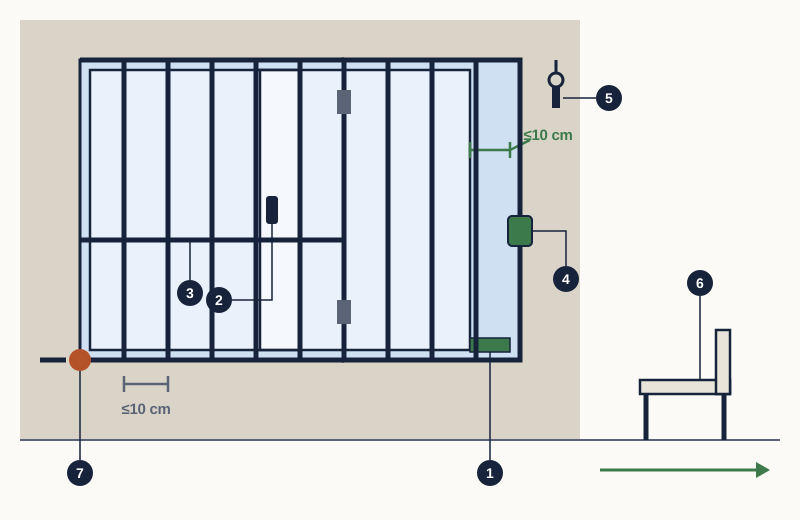
- Window stop limiting how far the sash slides open (about 10 cm)
- Lock on the sliding sash
- Grill with bars close together (no more than about 10 cm apart)
- Openable grill section with a release or lock that adults can open quickly from inside
- If it is locked, the key on a hook nearby, out of children's reach
- Furniture moved away so children cannot climb up to the window
- Grill fixing: watch for rust and loose anchors in the wall
- Check grills for rust at the welds and where they enter the wall. Repaint surface rust; call a fabricator for cracked welds or loose anchors.
- Make sure any openable grill section opens freely, keep its key nearby but out of children's reach, and practise opening it.[7]
- Where young children live, fit stops so windows open no more than about 10 cm (4 inches), or guards with bars no more than about 10 cm apart. The US Consumer Product Safety Commission (CPSC) recommends both, and warns that insect screens do not stop falls.[5]
- Lock sliding windows and move furniture away from them so children cannot climb up.[6] CPSC advises that guards on the sixth floor and below should be openable by adults in an emergency.[5]
Door closers and fire doors in the common areas
Stair and lobby doors in many buildings have an overhead closer that pulls the door shut. On a fire door, it keeps smoke out of the stairs, so a door wedged open defeats its purpose. UK fire door guidance tells residents to keep fire doors shut, not to tamper with self-closing devices, and to report faults promptly.[4]
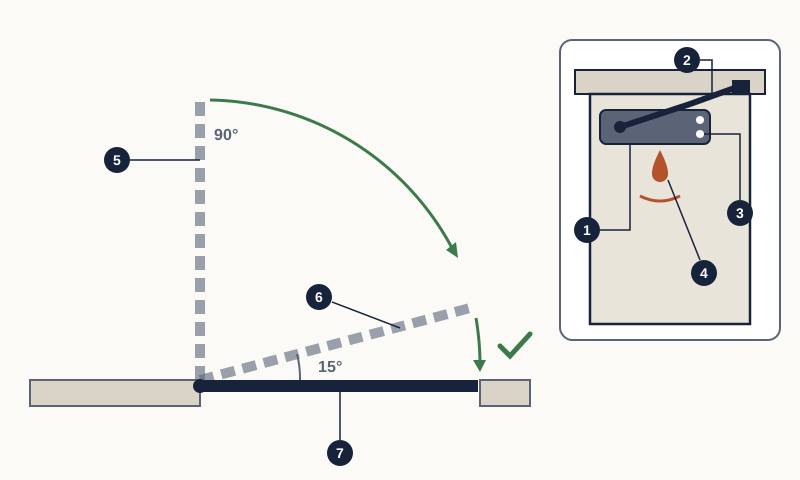
- Closer body
- Arm and bracket: check that every fixing screw is tight
- Adjustment screws (valves): set only as the maker's instructions say
- Oil on the body or the floor: a sign the closer is failing
- Test 1: open the door fully and let go
- Test 2: open the door about 15 degrees and let go
- Pass: in both tests the door closes fully into the frame and latches
A simple check, taken from UK guidance for buildings over 11 metres tall; it applies in England, but the test is useful anywhere:[4]
- Open the door fully and let go. It should close and latch fully into the frame.
- Open it to about 15 degrees and let go. It should still close and latch.
- Check the gaps round the edges (the guidance cites at most 4 mm at the sides and top) and that any smoke seals are intact and not painted over.
- Look for loose or missing screws in the hinges and the closer's arm, and for oil on or below the closer body, which usually means it is failing.
- Report any fault to the caretaker or committee in writing; do not adjust a common-area closer yourself.
The UK guidance has communal fire doors checked at least every three months.[4] Bangladesh's own requirements come from the national building code and the fire service, which this guide does not restate, so a committee should ask a qualified fire-safety adviser what applies. Add the check to the monthly building maintenance checklist.
Prevention: a simple routine
- Monthly: vacuum the window tracks and check the drain holes.[1]
- After heavy monsoon rain: check the inside sills and the wall below each window.[9]
- Every three to four months: wash the window frames.[1][3]
- Twice a year: lightly oil hinges, handles and other moving parts.[3]
- Yearly: graphite in key cylinders, and dry silicone spray on aluminium tracks.[1]
- Yearly, before June: check the seals and the frame-to-wall sealant, and test the openable grill sections and their keys.[2][7]
- Every three months (committee): test that the fire doors close and latch on their own.[4]
Common mistakes to avoid
- Sealing or painting over drain slots to stop a leak; it traps the water and makes things worse.
- Spraying oil or a general-purpose aerosol into a lock.[3]
- Cleaning frames with solvents, bleach, scourers or a pressure washer.[1][3]
- Planing a door that is only swollen from monsoon damp; once it dries, the gap is too big.[2]
- Wedging a fire door open, or padlocking every grill and keeping the keys in another room.[4]
Repair, replace or call a professional
Call a professional, or ask the committee to, when:
- A door still drags after the hinges are tightened: the frame may have moved, or the door needs re-hanging by a carpenter.
- Rollers need replacing on a large or upper-floor sash, or a sash has come off its track.
- Mist appears between the panes of double glazing; the sealed unit must be replaced.[2]
- A grill is cracked, badly rusted at its anchors or loose, or a door closer leaks oil or no longer shuts the door.
- Water comes in round an upper-floor frame and the outside sealant needs renewing.
Replace rather than repair when the frame itself is corroded or split, when parts are no longer made, or when the same fitting keeps failing. Taking the old roller, seal or handle to an aluminium or hardware shop is the easiest way to find a match.
What affects the cost
We could not find reliable published prices for these repairs in Bangladesh, so none are given. The cost depends mainly on:
- The part: screws and graphite cost little; rollers, seals and handles more; a sealed glass unit, a closer or a new window much more.
- Matching: parts for a particular aluminium or uPVC system may have to be ordered.
- Access: outside work on upper floors needs safe access, which can cost more than the repair itself.
- Labour and warranty: a carpenter, window fitter or fabricator, and whether several flats can share one visit.
Get at least two written quotes that name the parts and the work; our guide to getting repair quotes explains how. Landlords can record these checks with the landlord maintenance checklist.
Next steps
- Open, close and lock every door and window, and note any that drag, stick or jam.
- Vacuum the tracks and clear the drain holes before the next heavy rain.
- Tighten loose hinge and handle screws, and put graphite in any stiff lock.
- Fit window stops or guards where young children live, and agree where the grill keys are kept.
- List the jobs that need a contractor, and report faulty common-area fire doors to the committee.
Common questions
- Should I spray oil into a stiff lock?
- No. Stegbar recommends powdered graphite in the keyway, and Clearview says not to oil cylinder locks or use solvent-based aerosol sprays.[1][3] Light machine oil is fine on hinges and other moving parts.
- Why does water collect in my sliding window track when it rains?
- Some water in the outer channel is normal; it should drain out through slots at the front of the frame. If it stays there or spills inside, the slots are probably blocked: clear them and test with a cup of water.[2][3] If water still gets in, have the seals and the outside sealant checked.
- How far should a window open in a flat with small children?
- CPSC recommends stops that limit the opening to no more than 4 inches (about 10 cm), or guards with bars no more than 4 inches apart, and says insect screens are not a safeguard.[5] Keep furniture away from windows so children cannot climb up.[6]
- Are fixed window grills a fire risk?
- They can be, because they block a way out and slow down rescuers. Fire departments advise release devices that open from inside without a key or great effort.[7] In a high-rise the stairs are the main escape route, so keep the flat's door, the corridor and the stairs clear as well.
Sources
The facts in this guide were checked against these sources.
- Maintaining your new aluminium doors & windows — Stegbar. accessed 18 October 2026.
- Windows and doors — Consumer NZ (published 15 February 2025 (updated)). accessed 18 October 2026.
- Care & Maintenance Guide — Clearview Home Improvements (hosted by CHS Group). accessed 18 October 2026.
- Fire Safety (England) Regulations 2022: fire door guidance — Home Office (GOV.UK) (published Updated 8 August 2025). accessed 18 October 2026.
- New Standards for Window Guards To Help Protect Children From Falls — US Consumer Product Safety Commission (CPSC) (published 21 June 2000). accessed 18 October 2026.
- Window Falls — Nationwide Children's Hospital, Center for Injury Research and Policy. accessed 18 October 2026.
- Security Bar Fire Safety — City of Euclid, Ohio. accessed 18 October 2026.
- Energy Saver Guide: Tips on Saving Money and Energy in Your Home — US Department of Energy (published August 2022). accessed 18 October 2026.
- Seepage Meaning Explained: Causes, Signs, Effects and How to Stop Wall Seepage — Asian Paints. accessed 18 October 2026.
This guide is general information. Have gas, structural and live electrical work done by a qualified, licensed professional. Your building’s rules and committee decisions take precedence over anything written here.
Written from the cited sources by the RUAP.NET editorial team. It has not been reviewed by a licensed engineer, plumber or electrician; for work on gas, structure or live electrics, use a qualified professional.
Spotted a mistake? Tell us — we check it, correct the guide and record the date of the correction. Report an error →